
The Mutation That Moved North
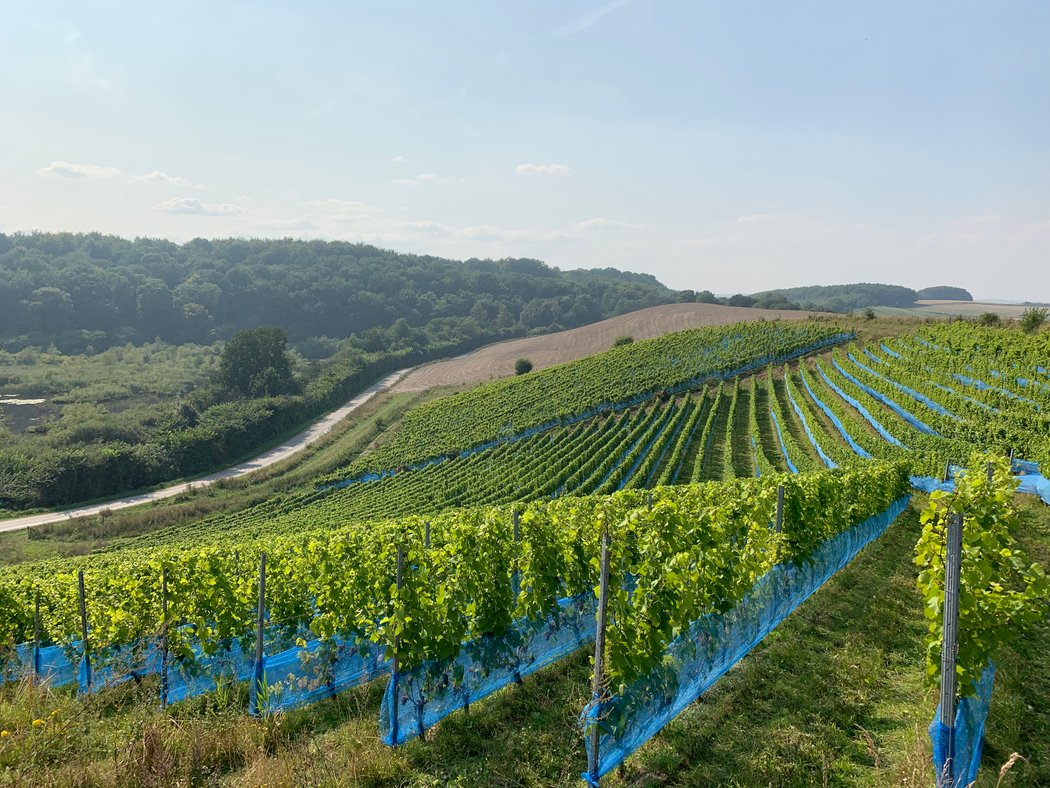
"On a 27-degree sand hill in western Zealand, Sune Albertsen is making serious red wine in a country that isn't supposed to have any. The grape got there first."
Denmark does not appear on anyone's mental map of red wine. Ask a sommelier in London or Tokyo to name a great cool-climate Pinot and they'll reach for the Mosel-adjacent reaches of Germany, maybe the Jura, maybe a windswept corner of Tasmania if they want to show off. They will not say Holbæk. Why would they. For most of recorded wine history, the latitude that runs through western Zealand was a place where grapes went to die quietly, ungrateful, green.
That's the consensus. Here's the thing the consensus keeps forgetting: borders move. Not the ones on maps — the ones grapes actually obey.
Pinot Noir Précoce — Frühburgunder, if you prefer the German — is an early-ripening mutation of Pinot Noir. The "précoce" is the whole point: it buds and ripens ahead of the parent, racing the calendar to beat the cold. Then the planet warmed, the grape's comfort zone drifted north like a slow tide, and somewhere around 2010 a man named Sune Albertsen looked at a steep, sandy, south-facing hill west of Copenhagen and decided the tide had reached him.
That's the idea behind Njord, and it's a genuinely good one. Not "Danish wine is having a moment" good — that's a press release. I mean an actual thesis about where a specific grape now wants to live, tested with a specific grape on a specific hill. Theses are rare in wine. Most people plant what their neighbours plant and call it heritage.
The grape figured this out before the trade did. It usually does.
The hill
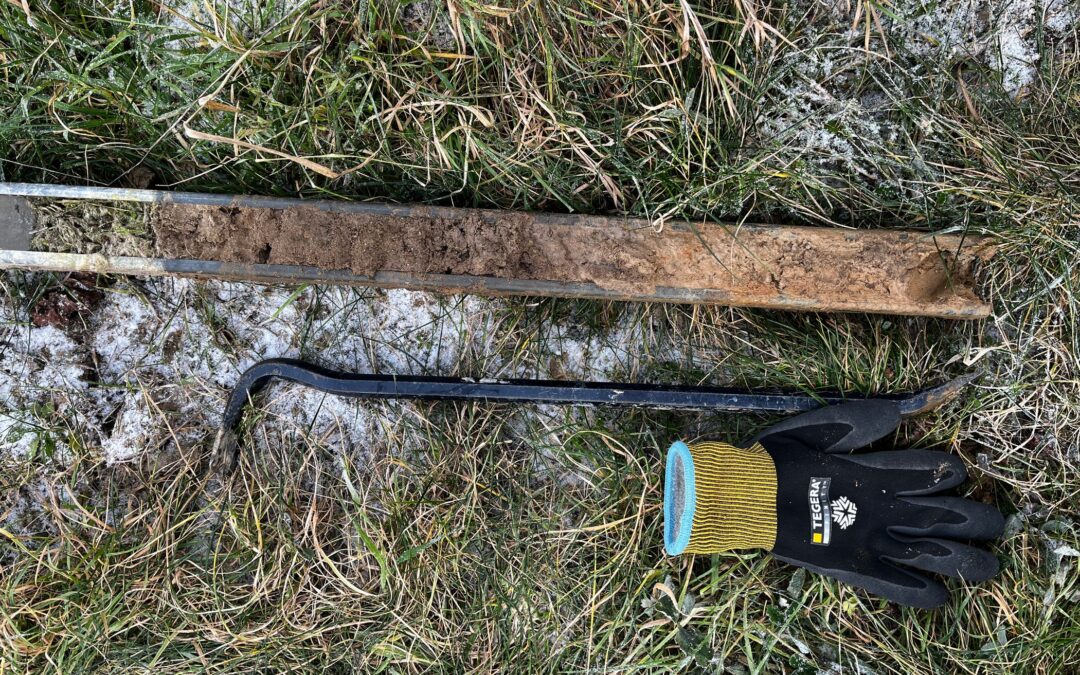
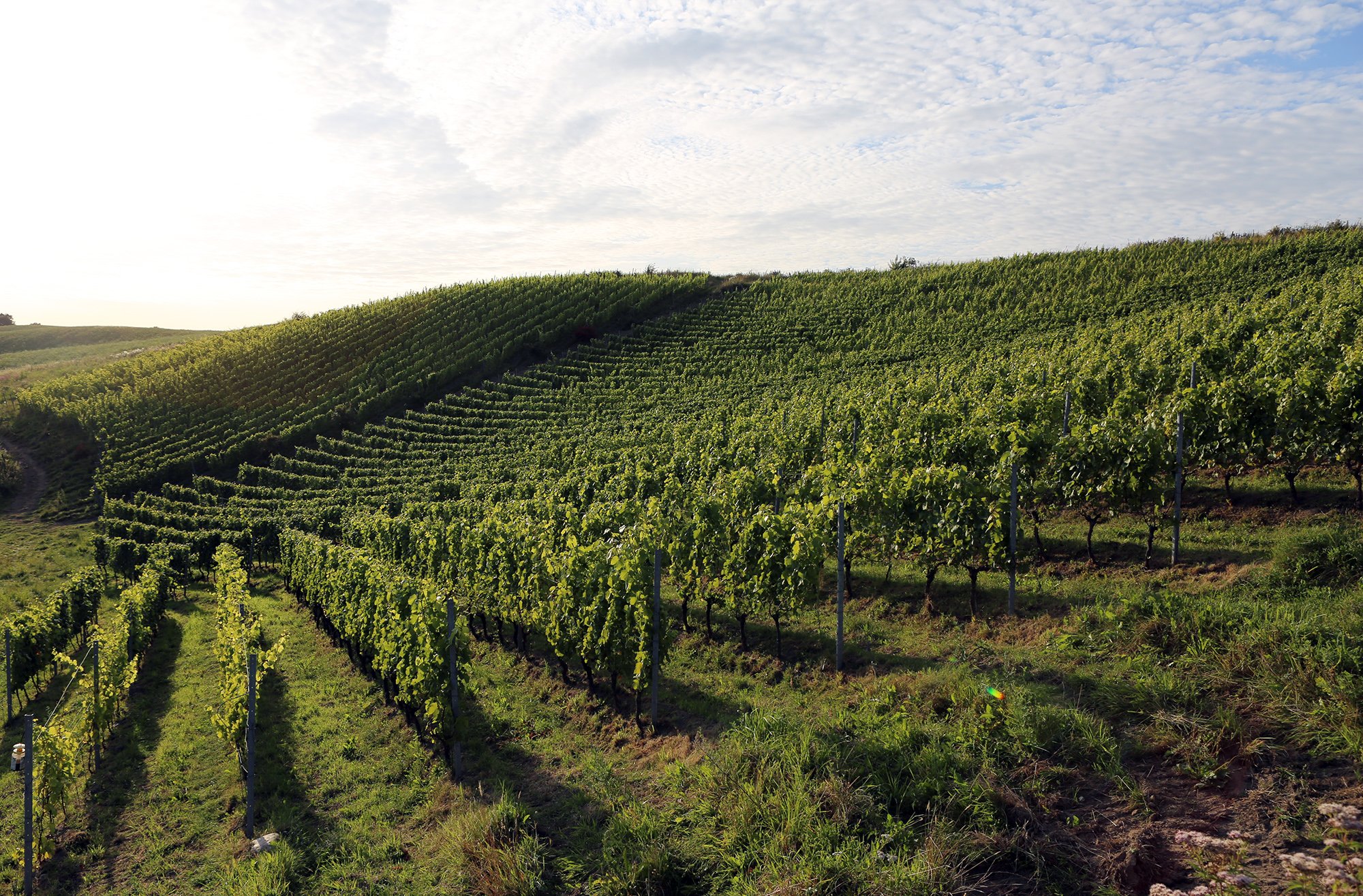
You want to understand Njord, start with the dirt, because the dirt is doing most of the heavy lifting. The vineyards sit on what the locals only half-jokingly call the "Zealand Alps" — glacial hills shoved up roughly 18,000 years ago when the last ice sheet finished with the place. Sand and gravel, piled deep, running down something like a hundred metres with no groundwater to speak of.
No groundwater means the vine has to work, has to send roots searching, has to suffer a little. Drainage like that is the difference between dilute and concentrated, between a wine that tastes of cold rain and one that tastes of something.
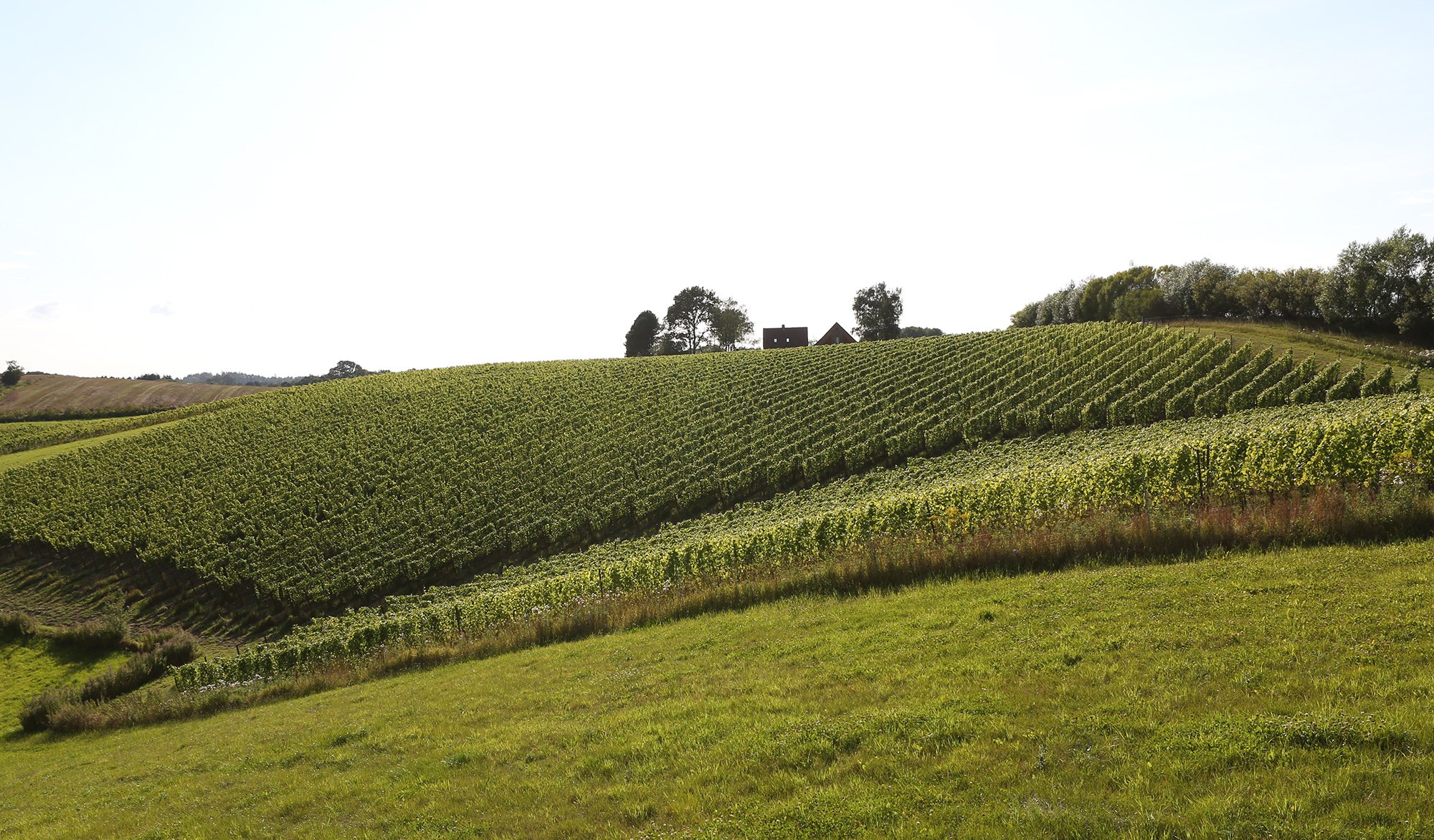
The main slope tilts at about 27 degrees. If you've never stood on a 27-degree vineyard slope, imagine trying to walk across a steeply pitched roof while carrying a crate of fruit. The topsoil is thin and light — sand, with the occasional thread of clay. Low fertility. Hostile, in the way the best vineyards tend to be hostile. This is not a clever marketing terroir. It's a place that would grow almost nothing else worth drinking, which is exactly why it might grow this.
Eight hundred and thirty-eight bottles
The first commercial vintage, 2013, produced 838 bottles. Write that number down and sit with it. That isn't a winery in any industrial sense. That's a 1.2-hectare act of faith — barely the size of a generous Burgundy lieu-dit — and 838 bottles is the kind of output that disappears among friends before it ever reaches a shelf.
And Njord nearly did fold, the hard way. The notes are blunt about 2015 to 2017: very low yields, and in some of those vintages no main Pinot Noir Précoce at all. That's three years of a young grower on a brutal slope watching the weather take the crop and wondering whether the whole northern-latitude thesis was a beautiful idea or just an expensive one.
Then 2018 happened, and 2019, and the wine started behaving like the thesis was right after all.
What's actually in the cellar
Albertsen has been doing the thing that separates serious red winemaking from hopeful red winemaking: he treats his grape like it has a personality and tries to read it rather than overrule it. The plant material is a small, deliberate collection rather than a single safe clone — GM4 and GM6 out of Germany's Ahr, a clone from Ingelheim, ST180 from Franken waiting its turn — vinified separately to keep each shape distinct before blending.
The early vintages were fully destemmed. From 2018 he started letting in whole bunches, around 40 percent, the way a winemaker does once he stops fearing his fruit and starts trusting it. Roughly three weeks on skins, then pressed straight to cask. Around a third new oak — restrained, the right number for a grape this transparent. And the detail I keep returning to: in the 2018, no sulphur added until the following August. A long, patient, hands-off élevage, in a country that has every reason to be in a hurry.
The Danish critic Winehog calls the results balanced, transparent, refined — generous in warm vintages but with the acid spine still intact. Generosity and freshness is the Burgundy promise. Hearing it said about a wine from Tølløse is genuinely strange, in the good way. The range now fans out — Issø, Sandhøj, Terrassen, cuvées called En Variation and Et Skud, Chardonnay going into the ground, a sparkling project — but the discipline to keep the Précoce at the centre is what makes it a project and not a hobby.
The vanishing picture
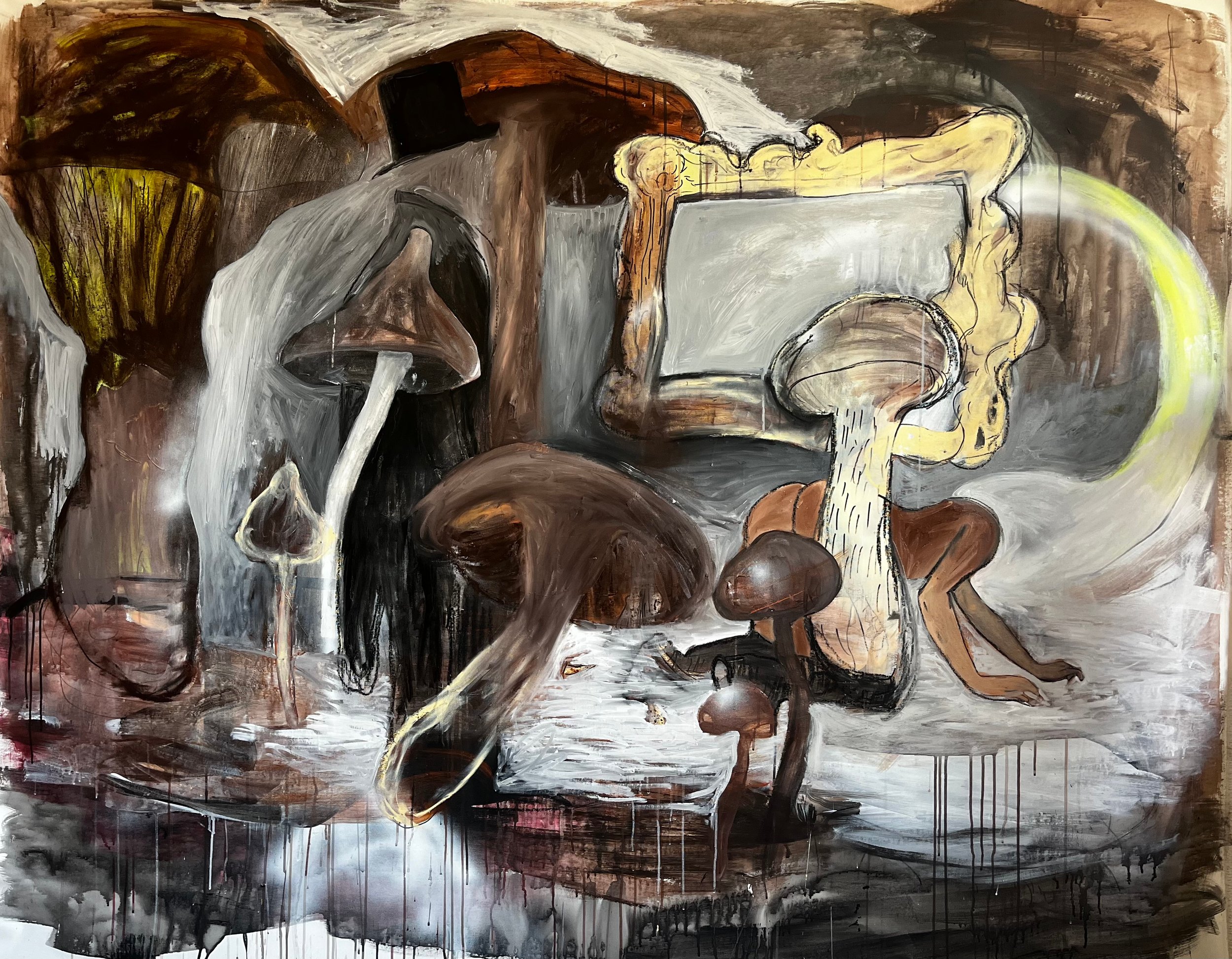
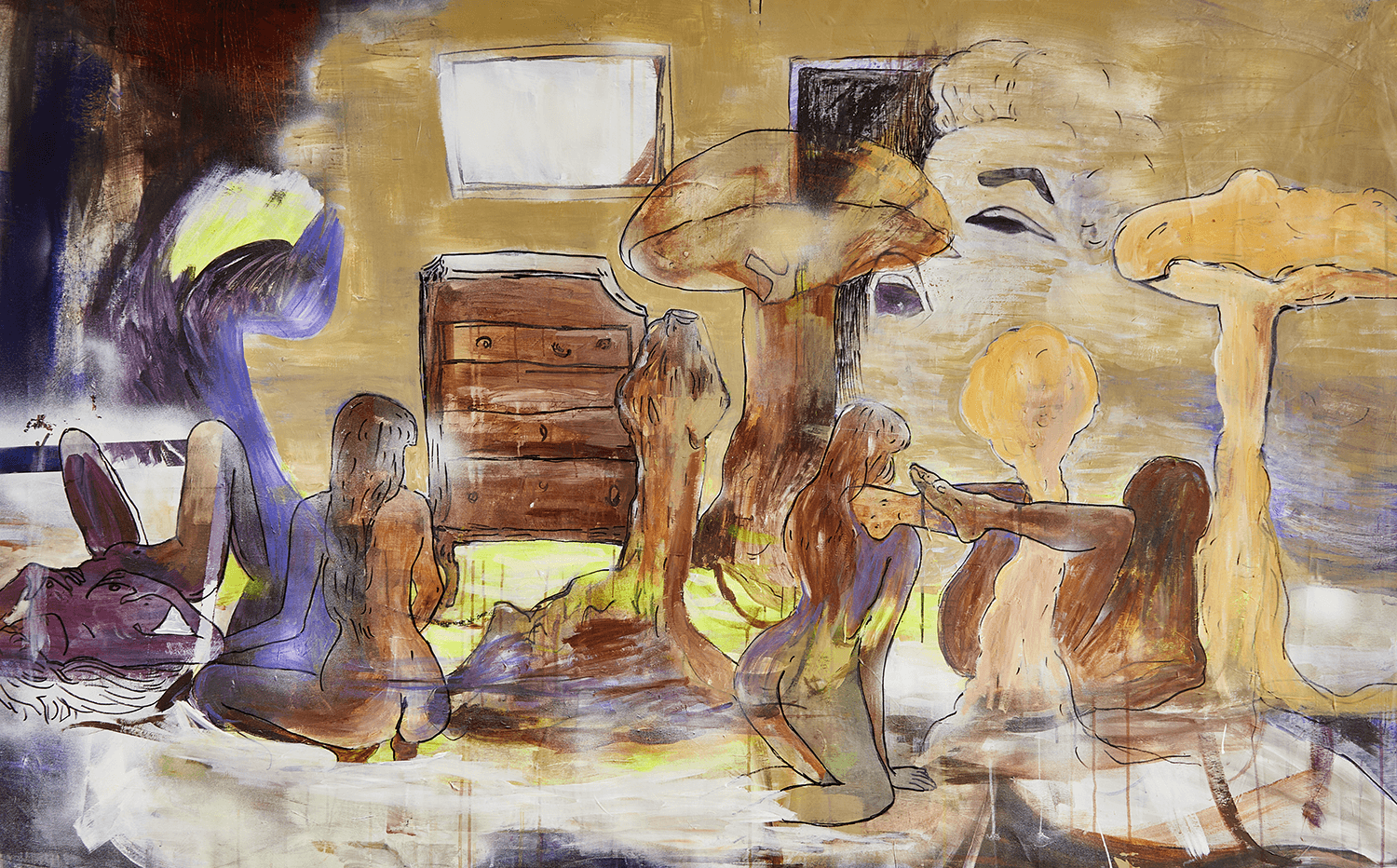
One detail I can't let pass. Every vintage wears a unique label by the Danish artist Janna Kirkeby, and Njord frames it the way you'd hope a thoughtful person would: the image belongs to that vintage, and it disappears as the bottle is drunk. The artwork is mortal, like the wine. You don't get to keep it.
It would be easy to read that as twee. I don't. It's a small, honest statement about what wine actually is — a thing that exists to be destroyed, that only completes itself in the moment it ceases to exist. Most estates put a crest on the label and pretend permanence. This one puts a picture on the bottle and admits the opposite. I find that more grown-up than any château drawing.
What it's really about
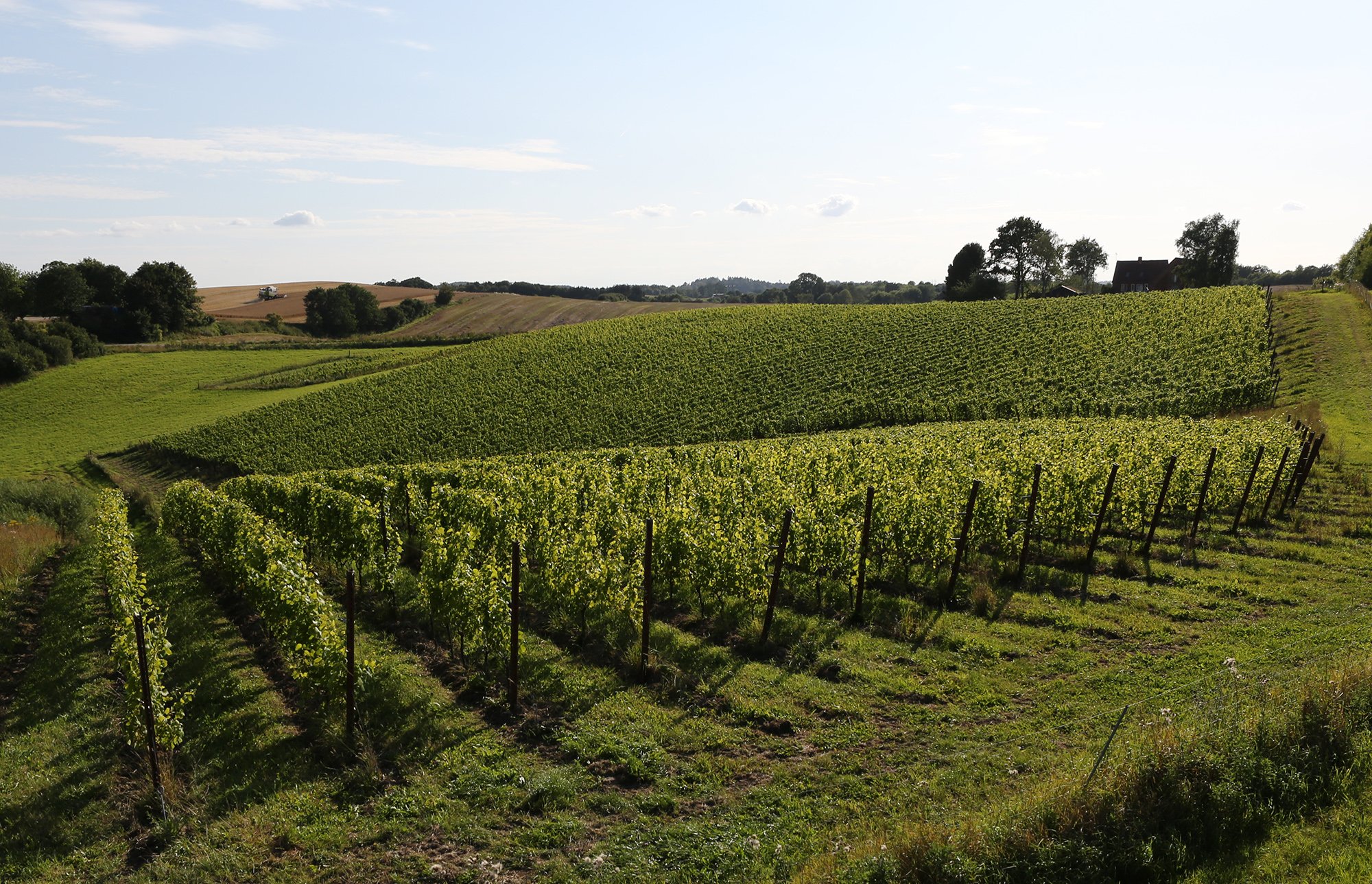
In 2024 Njord planted a new 2.14-hectare site — south-east facing, 25 percent gradient, the same hungry sand — to more Pinot Noir Précoce and Chardonnay. After 838 bottles and a near-death stretch in the mid-2010s, that's the most confident sentence in the whole file. You don't nearly double your vineyard for a grape that doesn't work.
And that's what makes Njord worth your attention before the rest of the world finds it — which it will, because the secondary market loves a cult origin story and "first serious Danish red" is exactly the kind of line that ends up on auction lots. Njord isn't a curiosity. It's a small, stubborn argument that the map of where great Pinot can grow is being quietly redrawn while everyone keeps reciting the old one.
You probably won't find it easily. There isn't much, and there's less than there sounds. But if a Danish red can hold freshness and elegance on a roof-pitched sand hill at the latitude of southern Sweden, then a lot of received wisdom about cool-climate limits is older than the climate it describes.
Somewhere on that 27-degree slope, the young vines from 2024 are deciding what they're going to be. I'd give them a few years. Then I'd very much like to find out whether the mutation that moved north knows something the rest of us haven't admitted yet.
Frequently asked questions
Where is Njord, and what does it make?
Njord is a small estate on a steep, sandy, south-facing hill in western Zealand, Denmark, near Holbæk and Tølløse. It specialises in serious red wine from Pinot Noir Précoce (Frühburgunder), an early-ripening mutation of Pinot Noir.
Why can Denmark grow serious Pinot now?
As the climate warmed, the comfort zone of the early-ripening Précoce drifted north. On a 27-degree slope of deep sand and gravel with no groundwater, the grape can ripen while keeping the acid tension that hotter regions tend to lose.
How much wine does Njord make?
Very little. The first commercial vintage in 2013 was just 838 bottles from about 1.2 hectares, with very low yields — and in some 2015–2017 vintages no main Précoce at all. A new 2.14-hectare site was planted in 2024.
What is the wine actually like?
By reputation, balanced, transparent and refined — generous in warm vintages but keeping a firm acid spine. Whole-bunch fermentation (around 40% from 2018), roughly a third new oak, and a long, patient élevage are all aimed at preserving freshness rather than burying it.
Hidden names, great wines — in your inbox
New winemaker profiles and tasting notes, now and then. No noise, no filler.
No spam. Unsubscribe anytime.