
Ulysse Collin: Champagne’s Quiet Revolution
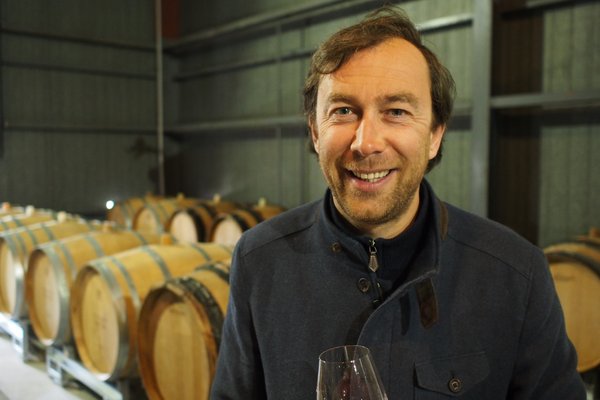
It’s easy to forget that some of the most important changes in wine don’t happen in grand tasting rooms or during celebrated releases. They happen in the mud. Behind a tractor wheel. In a legal dispute. Or in an old vineyard whose name doesn’t appear in any wine guide. The story of Olivier Collin and his domaine, Ulysse Collin, is one such quiet revolution—one that began not with a manifesto but with a plow.
From Silence to Signal
Back in 2004, few people paid attention to Congy, a village tucked away in the Côteaux du Petit Morin—a region neither glamorous nor even clearly defined on Champagne maps. But something unusual happened that year: Olivier Collin made his first wine. No fanfare, no special label, just one barrel-fermented Blanc de Blancs from a plot called Les Pierrières. Fast-forward two decades, and Collin is now among the most respected grower-producers in Champagne. How did this happen?
First, a detour through history. The Collin family has been working the land in Congy since at least 1812. They bottled their own wines in the early 20th century, even won a prize in Paris in 1935. But Olivier’s father, wary of the risks of small-scale production in a forgotten area, leased the vineyards to Pommery. For years, the family’s wine heritage sat idle.
That changed in the ’90s, when Olivier—then a law student with a growing passion for wine—began thinking seriously about reclaiming the vineyards. The transition was anything but simple. It required legal negotiation, viticultural training, and the grit to rebuild nearly from scratch. The 2003 vintage, his first intended harvest, was lost to frost. His story, fittingly, began not with triumph but with failure.
The Method Behind the Quiet
Collin didn’t start out trying to make “iconic” Champagne. He simply began working the land. The first move? Buying a tractor and plowing. Healthy soils, he believed, were non-negotiable. That conviction led him to reject synthetic fertilizers and rely instead on compost and manual labor. His approach to mildew—using biodegradable synthetics over copper sulfate—was based less on trend than on environmental reasoning.
The wines, too, have evolved. Early on, Olivier relied on used Burgundy barrels. Now, he rotates his own collection of barriques, some of which he replaces every year. He’s refined his pressing equipment, adopted large oak casks for storing reserve wines, and pushed aging sur lattes from two to six years. Perhaps most importantly, he stopped allowing his vins clairs to oxidize. “If a wine is going to age gracefully, it has to start out life young,” he says—an idea that cuts against Champagne’s fondness for oxidative charm.
He’s also begun adjusting dosage—slightly—under the influence of his wife Sandra. His early wines were seen as ascetic, uncompromising. These days, they’re still razor-sharp, but a little more approachable. Less like a thesis; more like a conversation.
Where Geography and Preconceptions Collide
None of this would matter as much if Collin were working in Avize or Aÿ. But he isn’t. His vineyards are scattered across places that, until recently, the Champagne establishment didn’t talk about much—Congy, Barbonne-Fayel, and a string of slopes in the Côteaux du Petit Morin. These areas were once seen as workhorses: good for supplying the big houses, not worth spotlighting. That Collin has made world-class Champagne from them should cause a few redrawn mental maps.
Take Les Pierrières: just 1.3 hectares, with thin topsoil and flint-rich limestone that once attracted Neolithic settlers. The resulting Blanc de Blancs is electric, sharp-edged, and mineral-driven. Compare that to Les Roises—south-facing, older vines, more clay—and the wine is fuller, deeper, more textured. Les Enfers, from a slope just meters away, is delicate and ethereal. These aren’t grand crus, but they’re grand in character.
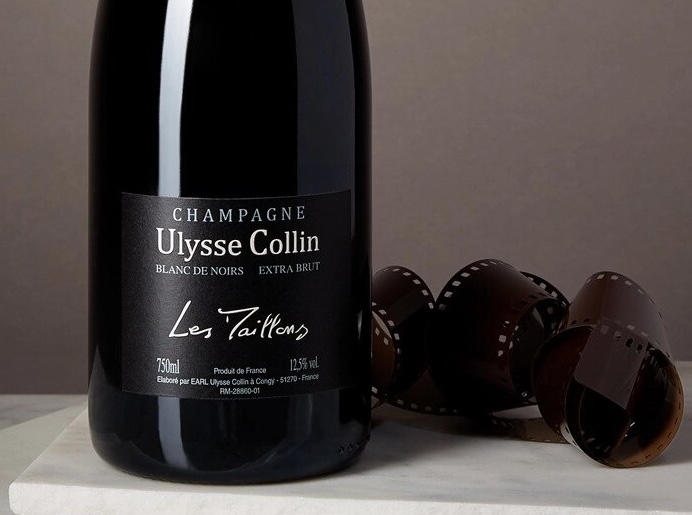
Then there’s Les Maillons, the outlier: a Pinot Noir vineyard in the Sézannais, planted in 1971. Once considered a region of bulk production, it now yields Collin’s most immediate and expressive wine, a Blanc de Noirs of disarming charm. It’s also the source of his gastronomic Rosé de Saignée.
Perhaps the most surprising of all is Le Jardin d’Ulysse. A departure from the single-variety wines that made his name, it’s a blend of Chardonnay, Pinot Noir, and Meunier, grown right behind the winery. North-facing vines bring tension; long aging—72 months sur lattes—brings polish. It feels like the quiet culmination of twenty years of inquiry.
What Happens Next?
Olivier Collin doesn’t speak in grand declarations, and his wines don’t ask for applause. Yet with each release, they quietly challenge how we think about Champagne—its maps, its hierarchies, and even its rules. His work raises good questions. What makes a cru “great”? Is it the vineyard’s fame, or what someone does with it? Can terroir speak if no one’s listening? And what does it take to make people look where they’ve never looked before?
There’s something bracing about Collin’s trajectory—not just because it defies convention, but because it’s grounded in patient, persistent work. Not performance. Not branding. Just decades of getting the soil right, the elevage right, the harvest timing right. And in the process, making the forgotten visible again.
Whether Champagne is ready to fully rewrite its geography remains to be seen. But the conversation has begun—and in no small part thanks to a man who started it behind a tractor in Congy.
FAQs
What makes Ulysse Collin’s Champagnes different from those of more established regions like the Côte des Blancs?
While the Côte des Blancs is known for its prestigious status and grand cru vineyards, Ulysse Collin works in the lesser-known Côteaux du Petit Morin and Sézannais. His wines showcase the overlooked potential of these areas, combining precise vineyard expression with long aging and minimal intervention.
Why did Olivier Collin wait until 2008 to label his wine as Les Pierrières?
Although he began vinifying Les Pierrières in 2004, Collin believed the vineyard only returned to full health and character by 2007, after years of careful rehabilitation. He waited until he felt the site’s true personality was fully expressed before naming it on the label.
What is the role of reserve wines in Collin’s production?
Since 2012, reserve wines aged in large oak casks have played an increasing role in adding complexity and consistency. This approach allows Collin to reduce oxidation and highlight freshness and depth in his cuvées.
How does Olivier Collin approach sustainability in the vineyard?
Collin avoids chemical fertilizers and herbicides, uses compost and manual soil work, and selects environmentally safer methods to combat mildew and oidium. His emphasis on living soils is central to his philosophy of expressing terroir.
Are Ulysse Collin’s lieux-dits classified as premier or grand cru?
No. None of Collin’s vineyards—including Les Pierrières, Les Roises, and Les Enfers—have cru status under the traditional échelle des crus. Yet, their quality and distinction challenge the validity of such classifications in modern Champagne.